
AHSS Insights Blogs
Advanced HSLA Steels: Going Beyond 550 MPa Yield Strength
Advanced High Strength Steels are a common approach that autobody engineers use for applications requiring grades with yield strength exceeding 500 MPa. Steelmakers are increasingly offering alternatives based on High Strength Low Alloy Steel production concepts. This article explores how those steels can be beneficial for automotive applications. Advanced High Strength Low Alloy (AHSLA) steels […]
Welding Distortion Simulation: Reducing Risk in Automotive Body-in-White Production
In automotive pre-production, building physical prototypes to test weld distortion is both costly and time-consuming. These distortions can create major challenges during production ramp-up, including poor part tolerances and visible warpage in outer panels. Welding distortion simulation helps address these risks early by predicting distortion before the prototype is built and by enabling countermeasures before […]
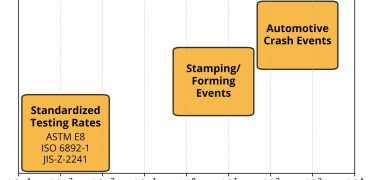
High Strain Rate Testing of Advanced High-Strength Steels
WorldAutoSteel periodically invites outside experts to contribute their knowledge on pertinent topics. Here, Danny Schaeffler, President of Engineering Quality Solutions and our Technical Editor for Metallurgy and Forming, worked with Trey Leonard, Ph.D. Founder and CEO, Standard Mechanics, LLC to bring you this overview of several aspects of High Strain Rate testing. You’ll find portions […]
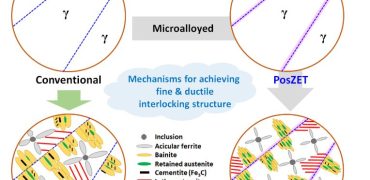
Micro-alloying of GMAW Filler Wire Increases Mechanical Properties and Corrosion Resistance in AHSS Automotive Welding
Introduction: Welding with Micro-Alloyed Wire In automotive vehicle assembly, gas metal arc welding (GMAW) plays an important role: Unlike the dominant resistance spot welding, it is not used as a bulk joining process, but rather specifically to meet the unique requirements of selected components in modern vehicle structures. GMAW of AHSS causes grain coarsening and a brittle weld […]
Case Studies in AHSS Alloy Selection
How Advanced High-Strength Steels Solve Cold Stamping Challenges in Automotive Body Structures Introduction In the automotive industry, manufacturing complex, high-strength deep-drawn parts using cold forming processes can create new challenges not previously encountered with body structures made from historically available conventional steels. Compared with even a decade ago, automotive engineers today have significantly more […]

AI Expulsion Prediction In Resistance Spot Welding Of Advanced High-Strength Steels
Resistance spot welding (RSW) is the most utilized joining process in car body assembly with exceptionally high demands on quality and reproducibility. Expulsion in RSW leads to ejection of metal from the weld and can cause equipment deterioration and re-working. As the RSW process has many variables both from the process itself and from the […]
Digitalization In Tailor Welded Blanking: Combining Numerical Simulations To Process Increasing Material Strengths
Efficient energy and resource use in automotive engineering is a major challenge that can only be overcome with innovative solutions, like digitalization in welding steel.
WorldAutoSteel Releases Latest AHSS Application Guidelines
Smarter Engineering for Tomorrow’s Vehicles In the fast-evolving world of automotive engineering, the ability to innovate safely and efficiently is paramount. Advanced High-Strength Steels (AHSS) have become the backbone of modern vehicle design. In less than a decade, the AHSS portfolio has nearly doubled—from 38 commercially available grades in 2017 to nearly 70 today—giving automakers […]

Mild Steels to Advanced Steels: The Phases Make The Difference
Steel’s performance starts at the atomic scale, where tiny changes in how iron and carbon atoms arrange themselves create dramatically different properties. This article explores how those atomic structures evolve into the ferrite, austenite, and advanced microstructures that power today’s high-strength automotive steels. Understanding Steel at the Atomic Level Atoms arrange themselves in three-dimensional […]