
Joining
The unique physical characteristics of Advanced High Strength Steels (AHSS) present some challenges to welding and bonding processes. AHSS differ from mild steels by chemical composition and microstructure, and it’s important to note that their microstructures will change from welding operations. When joining AHSS, production process control is important for successful assembly.
Manufacturers with highly developed joining control methodology will experience no major change in their operations, while others may require additional checks and maintenance. This section, authored and edited by Dr.-Ing Max Biegler, introduces joining processes that are applicable to High-Strength Steel automotive applications, while describing unique process attributes.
Resistance Spot Welding
Resistance welding processes represent a family of industrial welding processes that produce the heat required for welding through what is known as joule (J = I Rt) heating.
Read moreArc Welding Processes
This section serves as an introduction to arc welding processes. The common features and important concepts and terminology of this family of processes are reviewed, with more process-specific details provided in the sections covering the specific processes.
Read more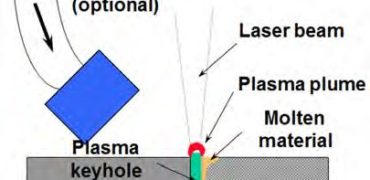
Laser Welding
The word “laser” is an acronym for “light amplification by stimulated emission of radiation.” Lasers produce a special form of light (electromagnetic energy) consisting of photons that are all of a single coherent wavelength.
Read more